What is the Keefer Roulette System?


The Keefer Roulette System is a roulette betting strategy attributed to author Jeremy B. Keefer. It is commonly described as a modified, capped Martingale-style progression combined with simultaneous betting on opposite sides of an even-money market.
Unlike a traditional Martingale, the Keefer progression does not simply double the stake after every loss. Instead, it uses a specific sequence of increasing stakes. The system also relies on two opposing progressions, which means that the results of the two bets are linked to the same roulette outcome.
In this strategy article, we explain how the Keefer system works, examine its progression and limitations, and provide examples of how the method can affect wins and losses.
Dr Catalin Barboianu, Mathematician and Philosopher of Science PhD

The Keefer system is a roulette betting system working as a modified, capped Martingale combined with simultaneous opposite-side betting. The Keefer progression deliberately limits the maximum exposure to 192 stake units, which is associated with a losing streak of 9 unfavorable outcomes, with a probability of about 0.30% and a cumulated loss of 384 units.
Most sequences in the Keefer system produce either +1, 0, or occasionally −384; therefore, the profit rate is low, as in Martingale, however the system is safer due to the limitation to 9 steps of increasing stakes. It creates the impression of lots of small wins and an occasional large loss, which is actually the characteristic of a negative progression system.
The math behind the Keefer system employs a two-dimensional state associated with the two progressions (as if each of two players uses the sequence), which is the distinctive feature of this system. As a result, the two players’ stakes evolve in opposite directions: when one player wins and resets or reduces their stake, the other loses and goes up to a higher stake.
Consequently, wins and losses partially offset each other at every non-zero spin, while a zero causes both stakes to lose. That adds to safety, but keeps the profit rate low.
Content Navigation
Overview of the Keefer Roulette System
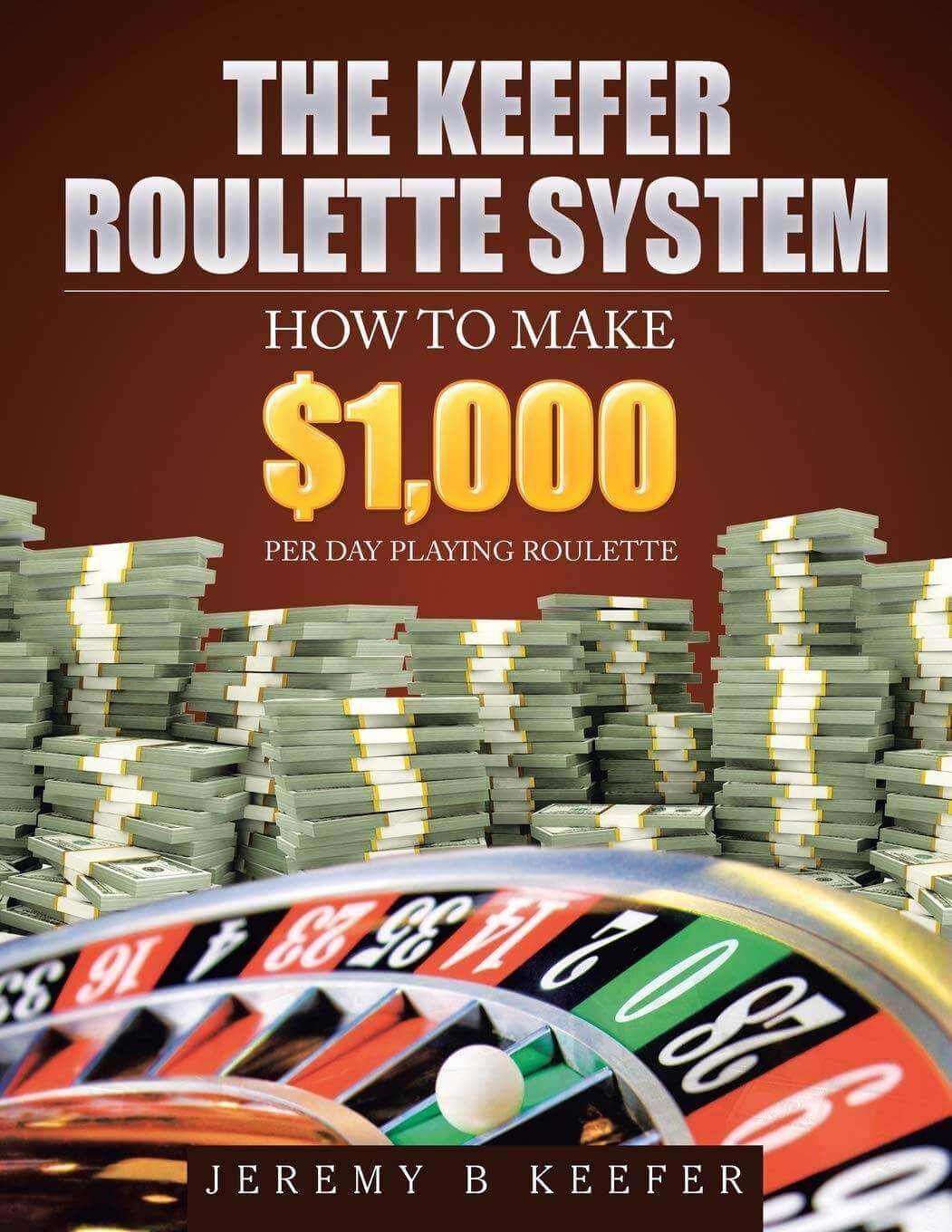
The Keefer Roulette System is a betting progression attributed to Jeremy B. Keefer and designed for roulette. It uses a predefined sequence of stakes and is primarily associated with even-money bets, such as Red/Black, Odd/Even and 1-18/19-36.
The strategy is often presented as a modified form of the Martingale. However, the Keefer progression differs from the traditional Martingale because the stakes do not simply double after each loss. The commonly described sequence is 1, 2, 3, 6, 12, 24, 48, 96 and 192 units.
The system does not increase the probability of a particular roulette outcome. A roulette spin remains independent of previous spins, and changing the size of a wager does not change the underlying probability of winning that wager.
It is therefore more accurate to view Keefer as a staking system rather than a method for predicting roulette results or overcoming the casino’s mathematical advantage.
Key Facts:
- The Keefer system is commonly described as a modified, capped Martingale-style progression.
- The commonly cited progression is 1, 2, 3, 6, 12, 24, 48, 96 and 192 units.
- The complete nine-step sequence requires a cumulative 384 units in stakes.
- The system is designed around even-money roulette bets and simultaneous opposite-side betting.
- Changing the stake size does not change roulette probabilities or remove the house edge.
- A losing sequence can produce a substantially larger loss than the small wins generated by individual successful progressions.
Samuel Karugu, Betting Expert & Writer for SilentBet

The Keefer Roulette System is presented in Jeremy B. Keefer’s book The Keefer Roulette System: How to Make $1,000 Per Day Playing Roulette. The book describes the author’s approach to roulette betting, but the claims made in its title should not be interpreted as evidence that the system can reliably generate a fixed daily income.
How the System Works
The Keefer betting method is based on opposite-side betting. It is generally described as a two-player strategy in which the players bet on opposite outcomes of the same even-money market.
For example, one player may bet on Red while the other bets on Black. Because the players are betting on opposite outcomes, a non-zero result will normally produce a win for one side and a loss for the other. If the ball lands on zero, however, neither Red nor Black wins.
The system therefore does not create a true 50/50 hedge. The zero pocket on European roulette, and the 0 and 00 pockets on American roulette, remain outside the even-money outcomes and give the casino its mathematical advantage.
Rules and Guidelines
The Keefer progression is intended for even-money bets. The commonly described sequence is:
1 → 2 → 3 → 6 → 12 → 24 → 48 → 96 → 192 units
A player begins with a 1-unit wager. After a loss, the progression moves to the next level. The exact treatment of a win depends on which of the two progressions is being considered, because the system involves two opposing bets whose stakes can move in different directions.
The important point is that the progression is not simply a rule to double the same player’s bet after every loss. It is a two-progression system in which the outcomes of the roulette spins affect the two opposing stakes differently.
The nine levels add up to 384 units:
1 + 2 + 3 + 6 + 12 + 24 + 48 + 96 + 192 = 384 units.
This does not mean that a player must lose 384 units every time the progression reaches its final stage. Rather, 384 units represents the cumulative amount of the individual stakes in the full nine-step sequence.
Setting Up Your Bets
Before using any progression system, players should determine the amount represented by one unit. The unit should be small enough that the player can afford the maximum intended exposure without relying on additional funds or increasing the unit after losses.
Players should also check the casino’s minimum and maximum table limits. A progression cannot be followed as described if the next required stake exceeds the table’s maximum bet.
Managing Your Bankroll
Bankroll management can limit the amount of money a player exposes to a betting session, but it does not make a negative-expectation roulette strategy profitable.
For the Keefer progression, the maximum stake and the cumulative exposure should be considered before play begins. A player should never increase the unit size simply because previous bets have lost.
Dividing a bankroll into 384 equal units may make the progression easier to calculate, but it does not make the bankroll sufficient to guarantee recovery from losses. A losing sequence can still exhaust the funds available for the strategy.
Calculating Potential Wins and Losses
With the Keefer system, potential results depend on the unit size, the progression level and the roulette outcome. Because the strategy uses even-money bets, a winning wager normally returns a profit equal to the amount staked, while a losing wager loses the amount staked.
However, the overall result of the Keefer system cannot be calculated from the unit size alone. The simultaneous opposing bets and their progression levels must also be taken into account.
Most importantly, the system does not alter the probability of the roulette outcome. The expected mathematical result remains determined by the roulette wheel and its house edge, not by the staking sequence.
Testing and Analysis of the System
Testing the Keefer system involves tracking both opposing stakes and the result of each roulette spin. It is important not to evaluate the strategy simply by counting winning spins, because a progression system can produce many small wins while remaining exposed to occasional substantially larger losses.
Example 1
Suppose one player has 2 units on Black while the opposing player has 6 units on Red. If the roulette ball lands on zero, neither Red nor Black wins. Both wagers lose, resulting in a combined loss of 8 units.
This example demonstrates why opposite betting does not eliminate the house edge. Zero is outside the Red/Black market, so both wagers lose when it appears.
Example 2
Suppose a player places 1 unit on the 1st dozen and the opposing player places 3 units on the 3rd dozen. If the ball lands on 27, the 3rd-dozen wager wins while the 1st-dozen wager loses.
Because dozen bets pay 2:1 rather than 1:1, the winning 3-unit wager produces a 6-unit profit. After subtracting the 1-unit losing wager, the combined result is +5 units, assuming no other wagers are involved.
This example also illustrates an important limitation: dozen bets are not even-money bets, so they should not be presented as a standard application of the Keefer system.
Tips for Implementing the Keefer Method for Roulette
If you decide to experiment with the Keefer method, the following points can help you understand and control the financial risk involved:
- Choose a fixed unit size
Set the unit before starting and do not increase it because of previous losses. A larger unit increases both potential wins and potential losses. - Know the maximum exposure
Understand the full progression and the amount you may need to stake before beginning. Never assume that a bankroll guarantees recovery from a losing sequence. - Check the table limits
Make sure the casino’s minimum and maximum bets allow the progression you intend to follow. A strategy cannot continue once the required stake exceeds the table limit. - Understand the roulette variant
European roulette has a single zero, while American roulette has both 0 and 00. The additional zero on American roulette increases the house edge on standard even-money bets. - Set a loss limit
Decide in advance how much you are prepared to lose during the session. A progression should never be used as a reason to chase losses.
Samuel Karugu, Betting Expert & Writer for SilentBet
The Keefer progression can provide a structured way to determine stake sizes, but structure should not be confused with a mathematical advantage. The roulette wheel determines the outcome, while the progression only determines how much money is exposed to that outcome.
Pros & Cons
- Pros
- Provides a predefined betting progression
- Has a clearly defined maximum stake in the commonly described nine-step sequence
- Can be used with even-money roulette markets
- Makes stake sizes easier to track than an improvised progression
- Cons
- Does not increase the probability of winning a roulette bet
- Does not remove the house edge
- Losses can become substantially larger as the progression advances
- Table limits can prevent the progression from continuing
- Zero, and 00 on American roulette, can cause opposing even-money bets to lose
Common Mistakes to Avoid
Progression systems can encourage players to focus on recovering previous losses. Understanding the main risks can help prevent the strategy from turning into loss chasing.
Mistake 1: Ignoring the progression limits
The Keefer sequence has a predefined number of levels. Players should not assume that they can simply continue increasing their stake after reaching the final level. Extending the progression creates a different and potentially much larger risk profile.
Mistake 2: Playing longer to recover losses
Previous roulette losses do not make a future win more likely. Continuing to play solely because a session is losing can increase the amount of money exposed without improving the underlying odds.
Mistake 3: Increasing the unit after losses
The unit should be determined before play. Increasing it after a losing sequence is not bankroll management; it increases financial exposure and can make losses more difficult to control.
Mistake 4: Confusing win frequency with profitability
A strategy can produce numerous small winning results while still experiencing occasional large losses. Therefore, counting winning spins alone is not a reliable way to determine whether a progression is profitable in the long run.
Bottom Line: Is the Keefer System Still Applicable Today?
Yes, the Keefer System can still be used as a structured roulette betting progression, provided the casino permits the required bets and the player understands the financial risks.
However, it should not be described as a guaranteed or proven way to make money from roulette. The system does not change the probability of roulette outcomes, eliminate the house edge or guarantee that losses will be recovered.
Its main characteristic is the way it manages stake sizes across a sequence of outcomes. The capped progression limits the commonly described sequence to a maximum stake of 192 units, but a full sequence still represents substantial financial exposure.
If you choose to use the strategy, set a fixed unit size, understand the maximum possible exposure and never increase your stakes to chase losses. Roulette should be treated as gambling entertainment rather than a reliable source of income.
Samuel Karugu, Betting Expert & Writer for SilentBet
The Keefer system is an interesting example of a progression-based roulette strategy, but its structured staking pattern should not be mistaken for a mathematical advantage. A winning session can happen, but the system does not change the underlying odds of roulette.
FAQs
Who created the Keefer roulette system?
The Keefer roulette system is attributed to Jeremy B. Keefer, an author who published The Keefer Roulette System: How to Make $1,000 Per Day Playing Roulette.
Can anyone use the system, or does it require specific skills or knowledge?
The basic betting rules do not require advanced mathematical skills. However, players should understand roulette probabilities, the progression rules, table limits and the financial risks before using the system.
Does the Keefer system increase the probability of winning?
No. Changing the size of a roulette wager does not change the probability of the underlying outcome. The progression changes the amount won or lost, not the probability of Red, Black or another roulette result appearing.
Does the Keefer system guarantee profit?
No. There is no guarantee of profit. A progression system can produce profitable sessions, but it cannot eliminate the house edge or guarantee that previous losses will be recovered.
What is the Keefer betting sequence?
The commonly described sequence is 1, 2, 3, 6, 12, 24, 48, 96 and 192 units. The nine stakes add up to 384 units if every level is reached once.
What happens if the ball lands on zero?
Zero is neither Red nor Black and is outside the standard even-money markets. As a result, opposing Red and Black bets can both lose when zero appears. On American roulette, the same applies to 00.
How long does it take to see results with the Keefer roulette system?
There is no fixed time in which the system produces a particular result. Outcomes depend on the roulette spins, the progression level and the amounts wagered. Short-term results do not demonstrate that the strategy has a long-term mathematical advantage.
Who should avoid using the Keefer roulette betting strategy?
Anyone who cannot afford to lose the money allocated to the session, does not understand the progression or is likely to increase stakes to chase losses should avoid using a loss-progression strategy.
Are there alternatives to the Keefer roulette system?
Yes. Other roulette betting progressions include the Martingale system, D’Alembert and Paroli. However, changing the betting progression does not remove the house edge. These systems should therefore be compared as staking methods rather than guaranteed ways to beat roulette.
 Certified Betting Expert